
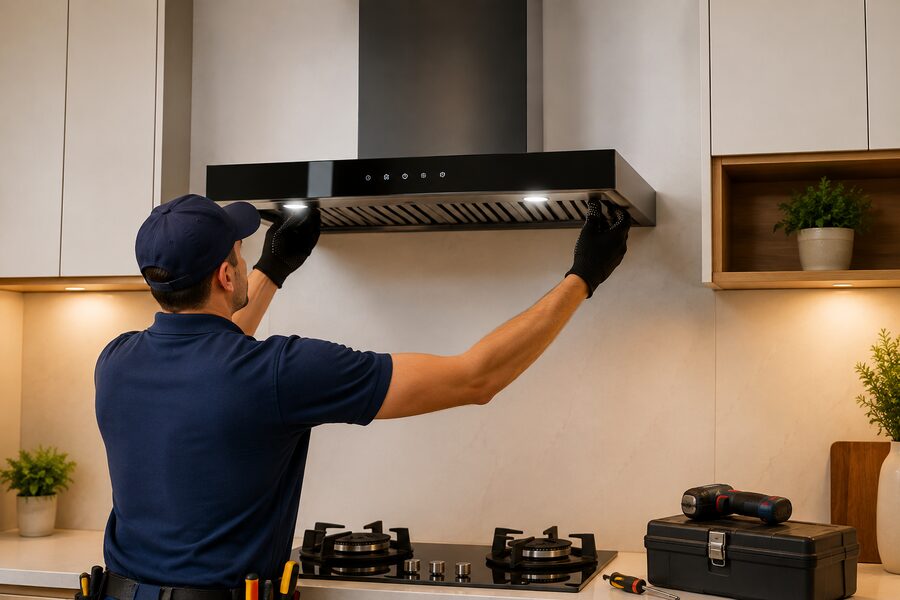
We install and repair chimneys of nearly every brand sold in India, and the most common regret we hear from customers is buying based on looks or price alone, without checking whether the unit actually suits their kitchen. Here is what we tell friends and family before they buy.
Suction rating: bigger is not always better
Suction is measured in m³/hr, and manufacturers love printing a large number on the box. What matters is matching that number to your kitchen size and cooking style — a small closed kitchen with light cooking does not need a 1500 m³/hr unit, and an open kitchen with heavy frying will struggle even with one.
- Small, closed kitchen, light cooking — 900 to 1000 m³/hr is usually enough
- Standard Indian kitchen with daily tempering and frying — 1200 to 1400 m³/hr
- Open-plan or large kitchen, heavy oil cooking — 1400 m³/hr and above
- Always check the duct size the unit is designed for, not just the suction number
A high suction number on an undersized duct pipe is wasted money — the air simply cannot move fast enough through a narrow duct, no matter how strong the motor is.
Lead Technician, Chimney & Hob Service
Filterless vs. baffle vs. mesh
Filterless (auto-clean) chimneys use centrifugal force to separate oil from air, need less manual cleaning, and generally cost more upfront. Baffle filters are easier and cheaper to maintain but need a wipe-down more often. Mesh filters are the least effective for heavy Indian cooking and clog the fastest — we rarely recommend them for daily tempering and frying.
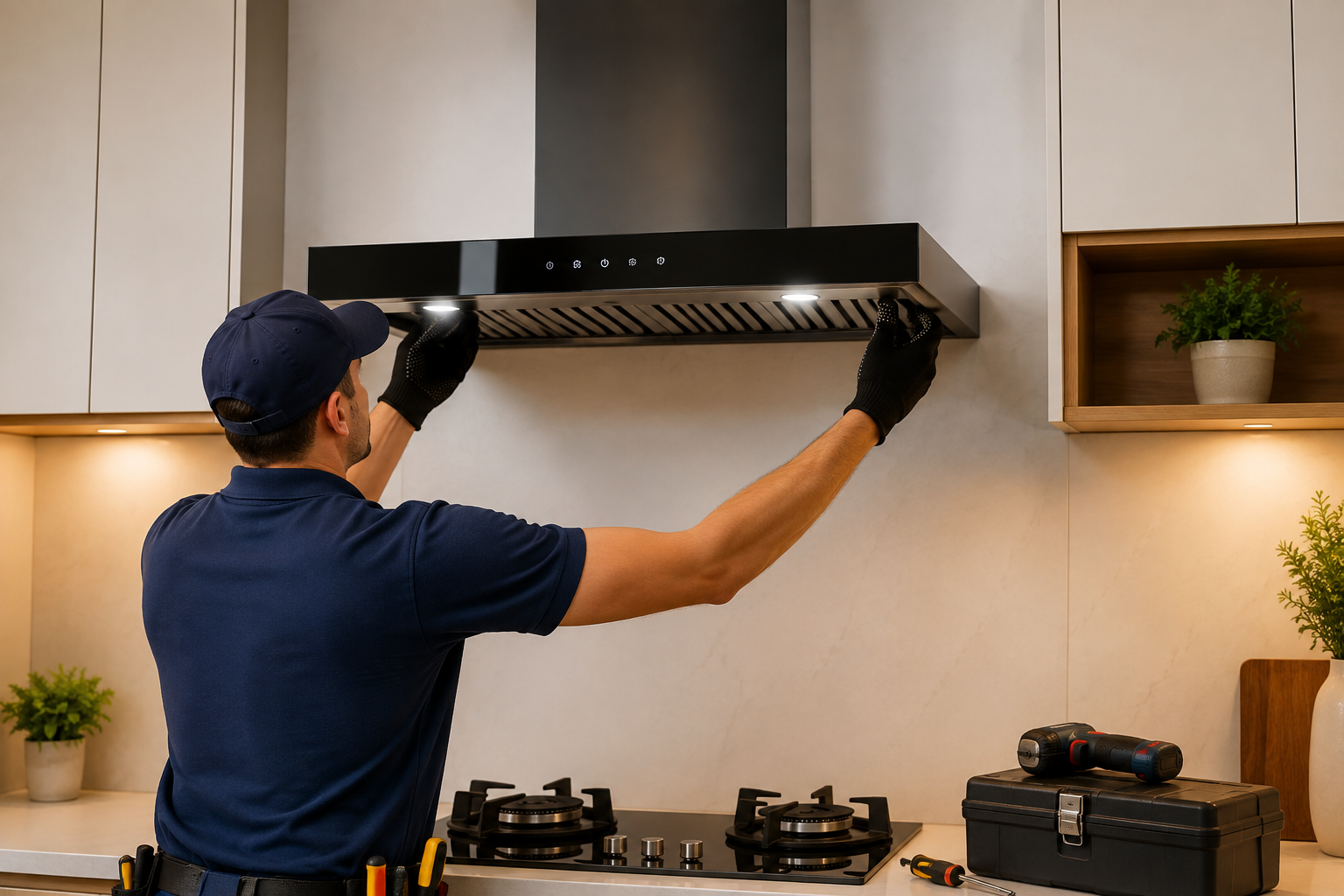
Whatever unit you choose, the installation matters just as much as the model — a great chimney with a poorly sealed duct or the wrong pipe diameter will underperform no matter what the box promises. Always get the ducting checked as part of the installation, not as an afterthought.