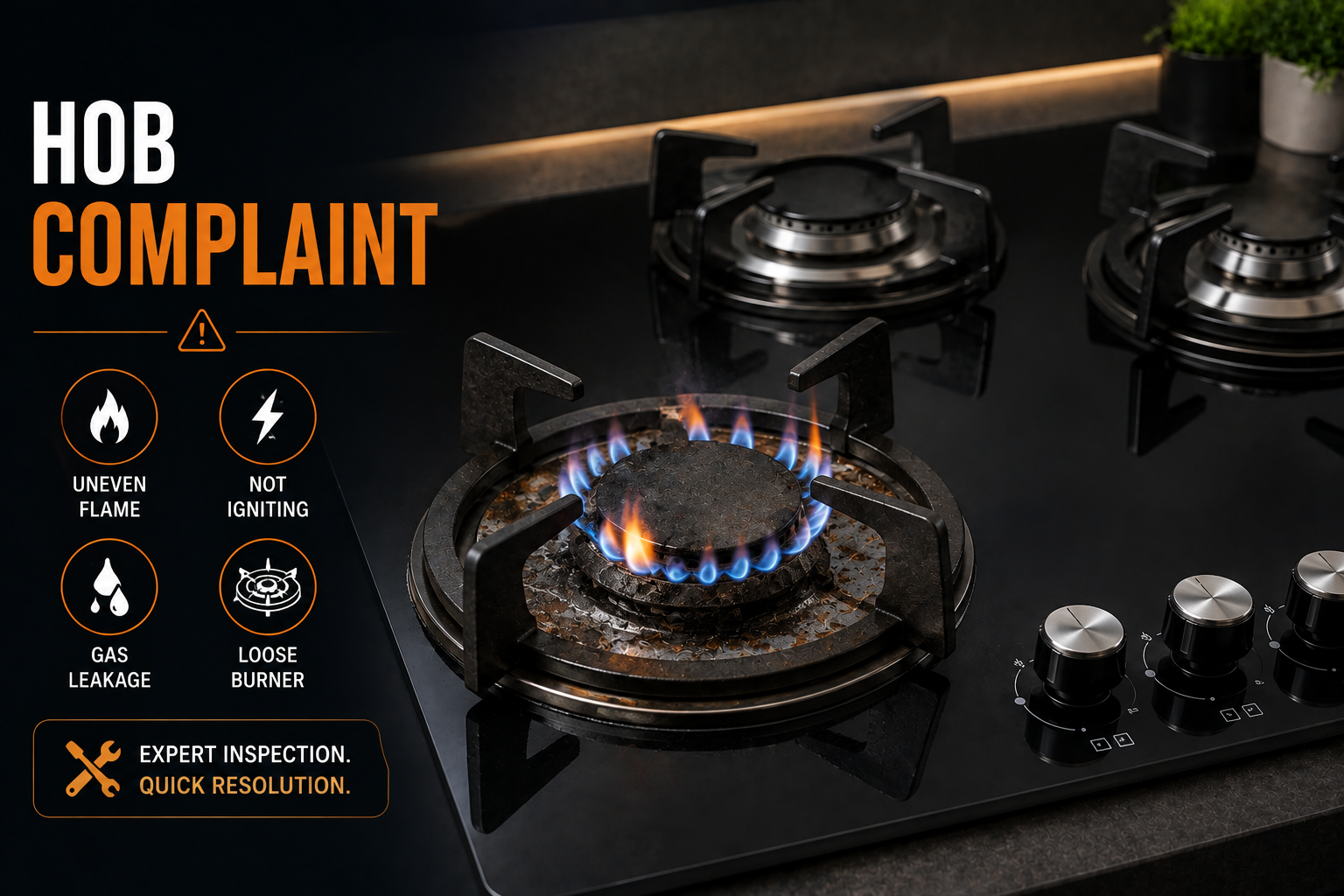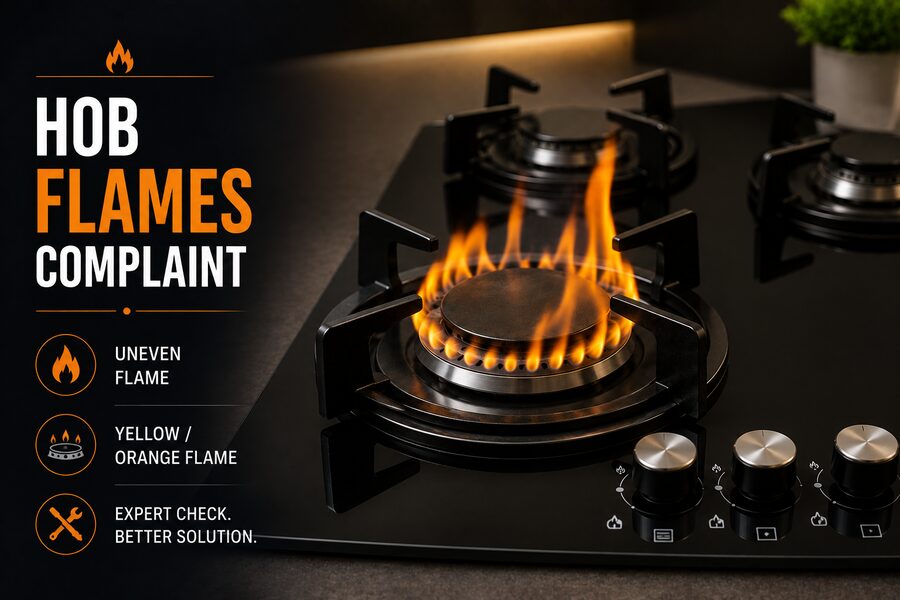
A burner that clicks endlessly but refuses to light is frustrating, but it is also one of the quickest faults to diagnose — because there are really only a handful of things that can cause it, and each one has an obvious tell.
Start with these four checks
- Is the spark visible at the electrode when you turn the knob? If not, the igniter or battery is the likely cause
- Is the burner cap seated correctly and dry? Spilled liquid or a misaligned cap is the single most common cause
- Does the gas smell present the moment you turn the knob? If not, check the cylinder and regulator first
- Are neighbouring burners lighting normally? If only one burner fails, the fault is local to that burner, not the gas supply
If the spark is visible and gas is flowing but it still will not catch, the electrode gap has usually shifted, or the port itself is blocked with food residue or rust. Both are quick fixes on-site.
Nine times out of ten, a burner that clicks but will not light just needs the cap seated correctly and the electrode cleaned. People assume the worst — a dead auto-ignition system — when the real fault takes five minutes to fix.
Lead Technician, Chimney & Hob Service
When it really is the auto-ignition system
If there is no spark at all across every burner, the battery is the first thing to check — auto-ignition modules typically run on a single AA battery that is easy to miss. If a fresh battery does not help, the piezo or electronic ignition module itself may need replacing, which is a simple part swap, not a full hob replacement.