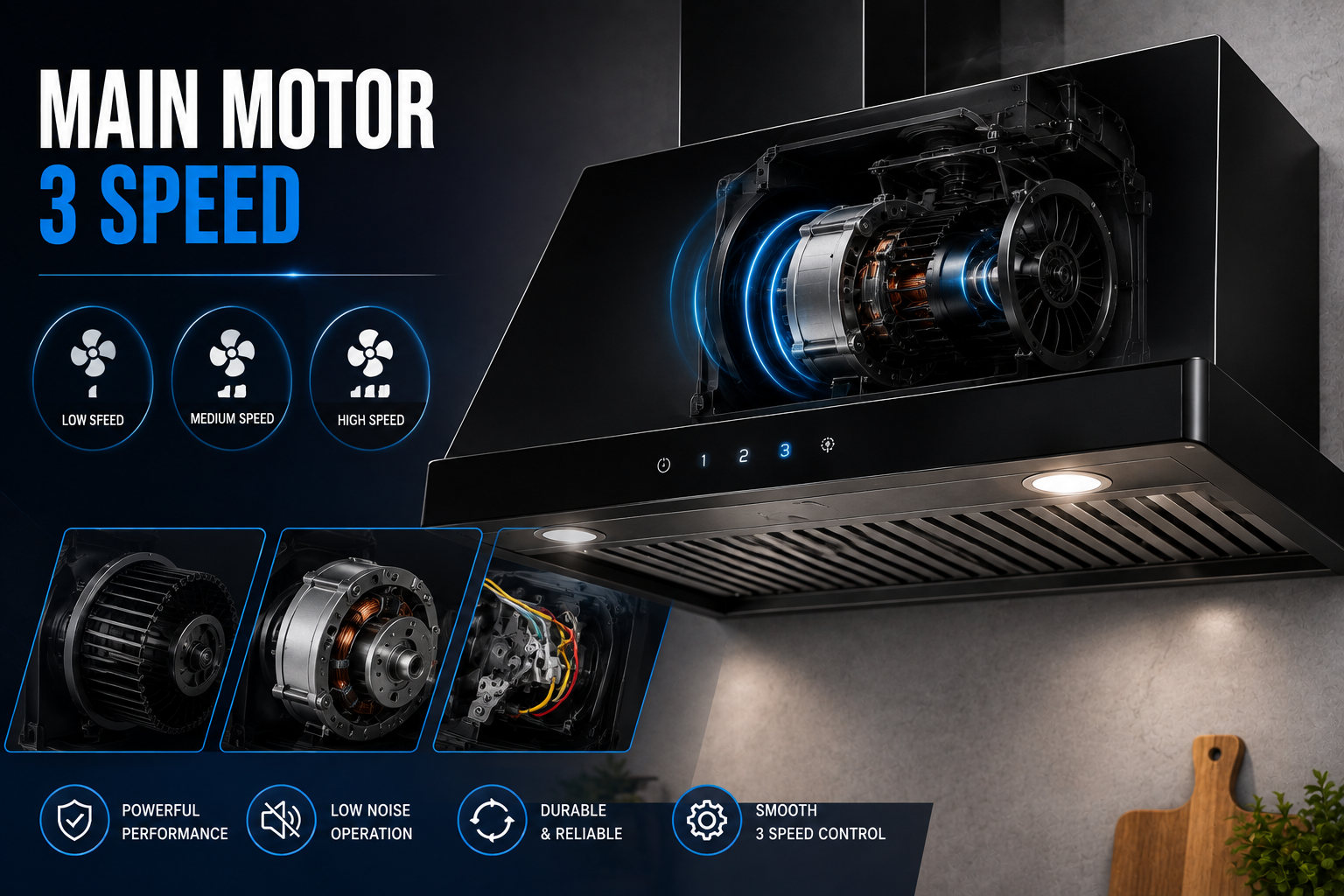
A chimney motor is built to run for years, but it almost never fails without warning. In nearly every emergency call we attend, the customer admits the chimney had been "sounding a bit off" for weeks. Catching the signs early is the difference between a ₹300 service and a full motor replacement.
The five signs to watch for
- A grinding or rattling noise that changes with the fan speed setting
- Noticeably weaker suction even right after a filter clean
- The motor taking longer than usual to reach full speed after switching on
- A faint burning smell when the chimney has been running for a while
- The chimney switching off on its own, especially on the highest speed
Any one of these on its own is worth getting checked. Two or more together usually means the bearings are worn or the windings are overheating under load — both are things we can test on the spot with a meter, without needing to guess.
Most people assume a strange noise means the whole chimney needs replacing. In reality it is almost always one part — the bearing, the blower fan, or the speed coil — and each of those can be replaced on its own.
Lead Technician, Chimney & Hob Service
Why early diagnosis saves money
A motor under strain draws more current than it should, and that extra heat is what eventually burns out the windings for good. Once that happens, a full motor replacement is the only option. Catching the strain early — through noise, smell or a suction drop — usually means only a bearing or blower fan needs attention.